
If you have North Carolina Medicaid and no reliable way to get to a medical appointment, you are not stuck — and you should not be paying out of pocket for the trip. Non-emergency medical transportation, or NEMT, is a covered Medicaid benefit, which means the ride to your doctor, your dialysis chair, or your specialist can be arranged for you at no cost. The catch is that almost nobody explains how to actually set it up. This guide walks through the real process, step by step, the way it works in the Charlotte metro in 2026.
Key takeaways
- NEMT is a free, covered benefit for NC Medicaid members who have no other way to reach covered care.
- You book it through the transportation number tied to your plan — not by calling the clinic.
- Give at least two business days' notice for routine trips; recurring care like dialysis can be set up once as a standing order.
- Have your Medicaid ID, the appointment details, and your pickup address ready before you call.
What “a free Medicaid ride” actually means
NEMT exists because a missed appointment is rarely just an inconvenience. For someone managing a chronic condition, a transportation gap can mean a skipped treatment, a delayed diagnosis, or an avoidable hospital stay. North Carolina, like every state, is required to ensure Medicaid members can get to and from medically necessary, covered services when they have no other reasonable option. That covers a wide range of trips: primary care and specialist visits, dialysis, behavioral-health appointments, physical therapy, lab work, and pharmacy runs tied to your care.
It does not cover emergencies — that is what 911 and an ambulance are for — and it does not cover trips that are not medically necessary. Think of NEMT as the planned, scheduled, no-cost ride to keep your care on track, not a taxi for errands.
Step 1: Find your transportation phone number
This is the step that trips most people up. You do not call your doctor's office to book a Medicaid ride, and you do not call a random transport company. You call the transportation line tied to your specific Medicaid plan. Most members in managed care book through their health plan's transportation broker; if you are still in fee-for-service Medicaid, your county Department of Social Services arranges the trip.
Where to look: flip your Medicaid or health-plan ID card over. The transportation or “rides” phone number is usually printed right on the back, alongside the member-services line. If you cannot find it, call member services and ask for “non-emergency medical transportation.”
Step 2: Call ahead — and know the notice window
For a routine, one-time appointment, plan to call at least two business days before your trip. That two-day window is the standard for most managed-care members, and it gives the broker time to confirm the appointment, match you to the right vehicle, and route a driver. If you use a specialized service rather than a broker network, you may need a little more lead time — four days is a safe assumption for non-urgent trips.
Same-day and next-day rides are sometimes possible for urgent, covered situations such as a hospital discharge or an unexpected treatment change, but they are never guaranteed. The single best habit you can build is to book the return trip and the next appointment as soon as you know the date.
Step 3: Have your details ready before you dial
The call goes faster — and your ride is far less likely to fall through — when you have everything in front of you:
- Your Medicaid ID number (from your card).
- The appointment date, time, and the provider's name and address.
- Your pickup address and a callback phone number.
- Whether you need a wheelchair-accessible vehicle, help to the door, or room for a companion or caregiver.
- Any return-trip details, if you know when you will be ready to head home.
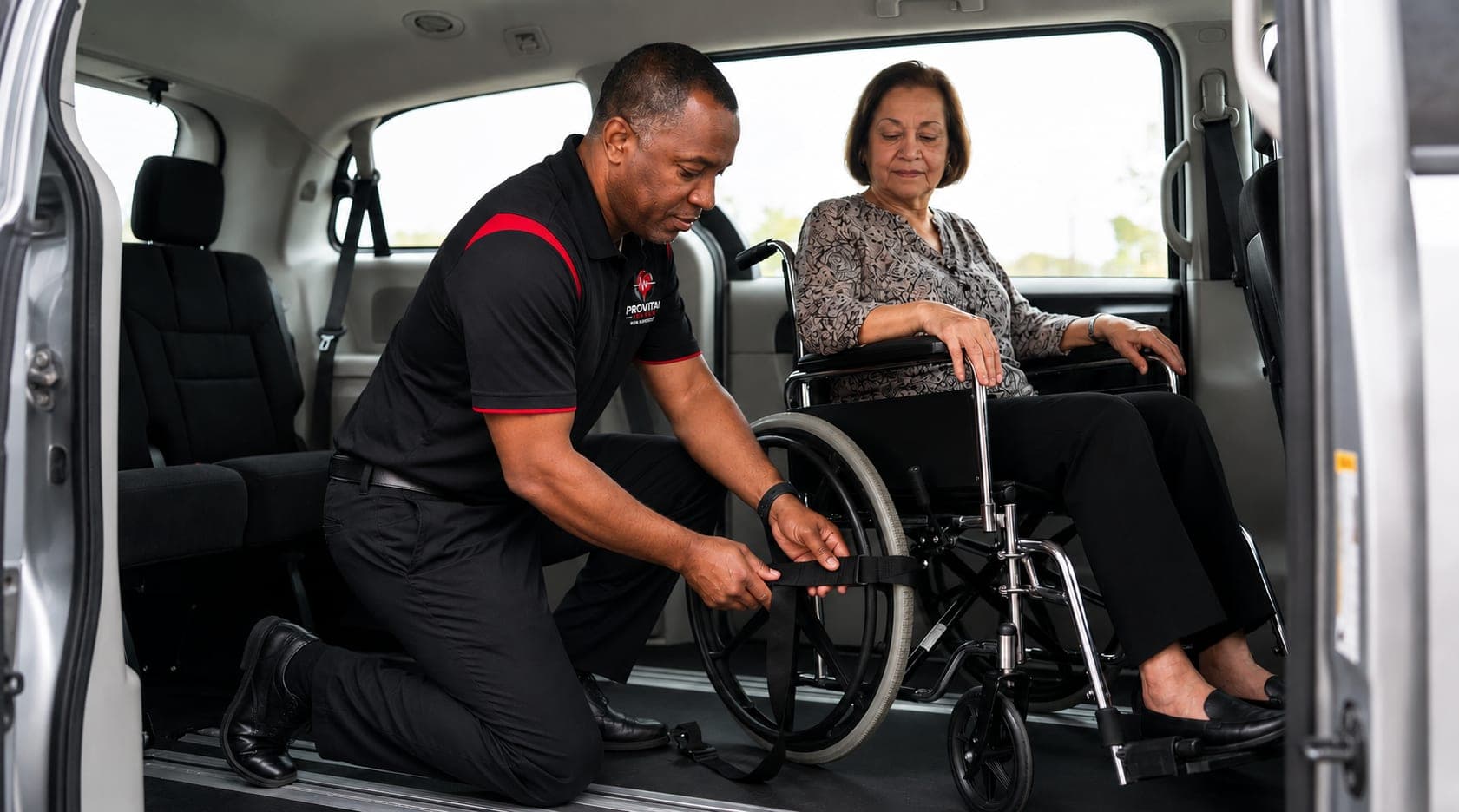
That last point about mobility matters more than people expect. If you travel in a wheelchair, say so on the call so the broker sends an ADA-accessible vehicle with a lift and proper securement, rather than a sedan you cannot safely use.

Recurring care: set up a standing order once
If you have appointments on a fixed schedule — dialysis three times a week, a weekly therapy session, a course of radiation — you should not be re-booking the same trip over and over. Ask your broker to set up a standing order (sometimes called a recurring or subscription trip). You arrange it a single time, and the ride repeats automatically on your treatment days until the order ends or your schedule changes.
This is the difference between reliable care and a weekly gamble. For dialysis transportation in particular, a standing order is the most important thing you can put in place, because a missed session is genuinely dangerous, not merely a rescheduling headache.
Standard Plan or Tailored Plan? It changes the details
North Carolina runs its Medicaid program through managed-care health plans, and which plan you are in affects how your transportation is arranged. Most members are in a Standard Plan. Members with significant behavioral-health needs, an intellectual or developmental disability, or a traumatic brain injury are served by a Tailored Plan. Both cover NEMT — the phone number and the broker behind it simply differ.
If you have recently switched plans, or you received a letter saying your plan is changing, confirm your transportation number before your next trip. A standing order does not always travel automatically from one broker to another, so it is worth a five-minute call to make sure your recurring ride is still on the books.
What to do when a ride is late or a benefit runs short
Even a well-run system has off days. If your driver has not arrived within a reasonable window of the scheduled pickup, call the transportation line and report it — do not wait silently and miss your appointment. Brokers track on-time performance and can often dispatch a replacement. Keep the confirmation or trip number from your booking call; it makes the follow-up far faster.
If you have exhausted a capped benefit or fall into a gap between plans, you still have local options in the Charlotte area, from county transportation programs to nonprofit ride services. The point is simple: a transportation problem should never be the reason you skip covered care.
The bottom line for Charlotte-area riders
NEMT is one of the most useful Medicaid benefits almost nobody talks about. Find the transportation number on your card, call at least two business days ahead, have your details ready, and set up a standing order for anything recurring. Do that, and the ride stops being something you worry about. You can read the program rules straight from the source at NC Medicaid's official NEMT page, and if you are arranging rides anywhere in Charlotte and the surrounding metro, a coordinator can walk you through the details and confirm the right level of service for your needs.