Infusion appointments rarely end when the schedule says they will. A port that flushes slowly, a delayed lab result, a nurse adjusting the drip rate for tolerance, premedications that have to finish before the main agent starts, can all push a "two-hour" appointment past four. By the time treatment wraps, the person walking out is not the same person who walked in. That gap, between the calendar and the body, is where a ride plan either holds together or falls apart.
This guide is organized the way an infusion day actually unfolds, because that is the only way to plan for it honestly. We will move through the days leading up to the appointment, the window when treatment is running, and the fragile hours afterward, with the specifics that matter for transportation to chemotherapy appointments across the Charlotte metro.
The week before: building the plan, not just the booking
The mistake most people make is treating the ride as a single reservation. For oncology, it is a system with a known weak point: nobody can tell you exactly when you will be discharged. Plan around that uncertainty instead of pretending it away.
Start by confirming the practical details with the infusion center, not just the appointment time. Ask three questions that shape the ride: roughly how long is this regimen expected to run, where is the patient pickup or discharge entrance, and is there a phone number a driver can reach on the day. Atrium Health Levine Cancer Institute, Novant Health, and the smaller infusion suites scattered across Charlotte NC each handle discharge logistics differently, and the entrance you walk in through is often not the one you should be picked up at.
Book the return as flexible, not fixed. Whether you use a non-emergency medical transportation (NEMT) provider, a county program, or a family member, agree in advance that the actual departure time will be confirmed by a same-day call or text, not locked to the clock. A rigid return time is the single most common reason a chemo ride goes wrong.
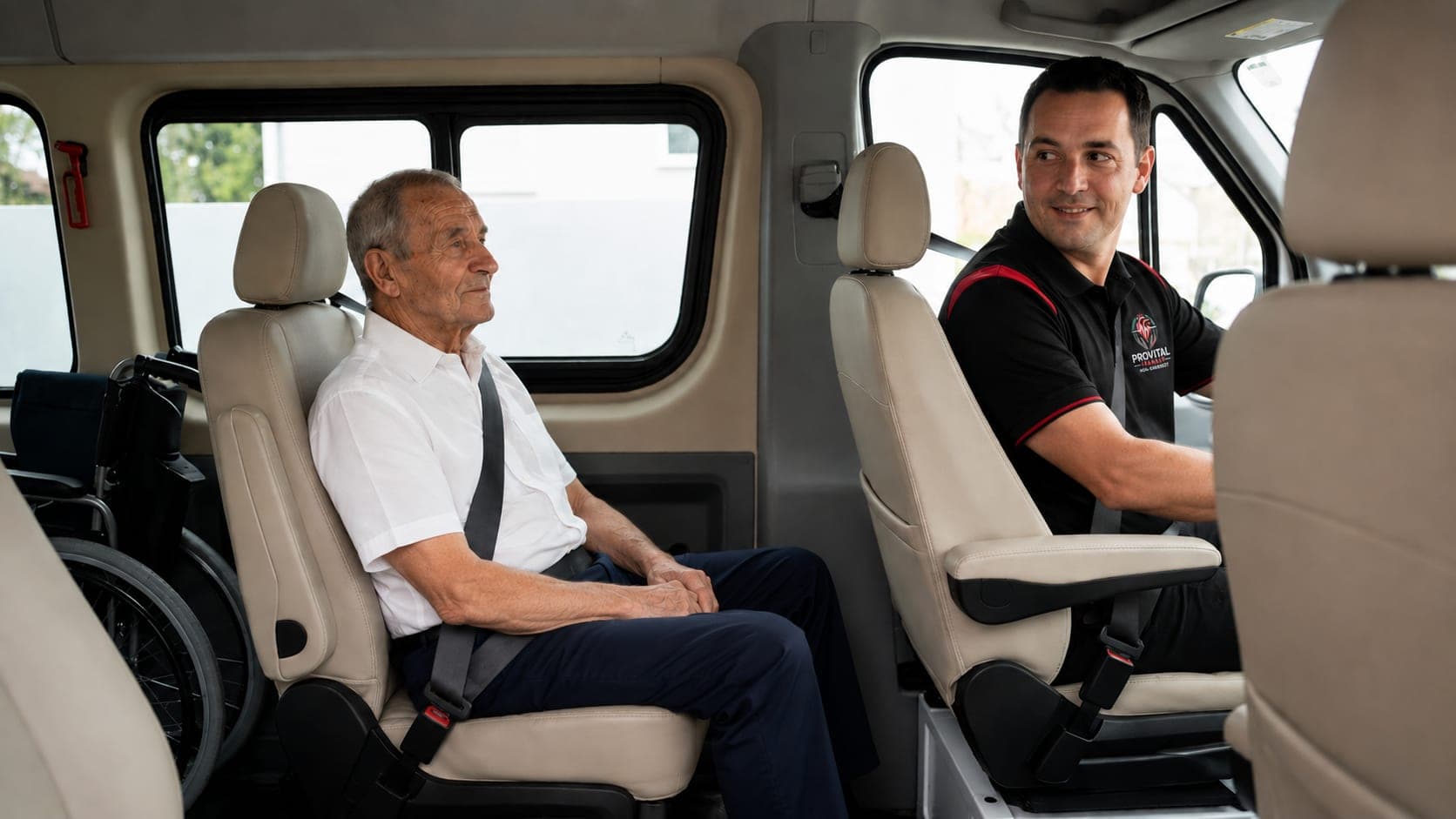
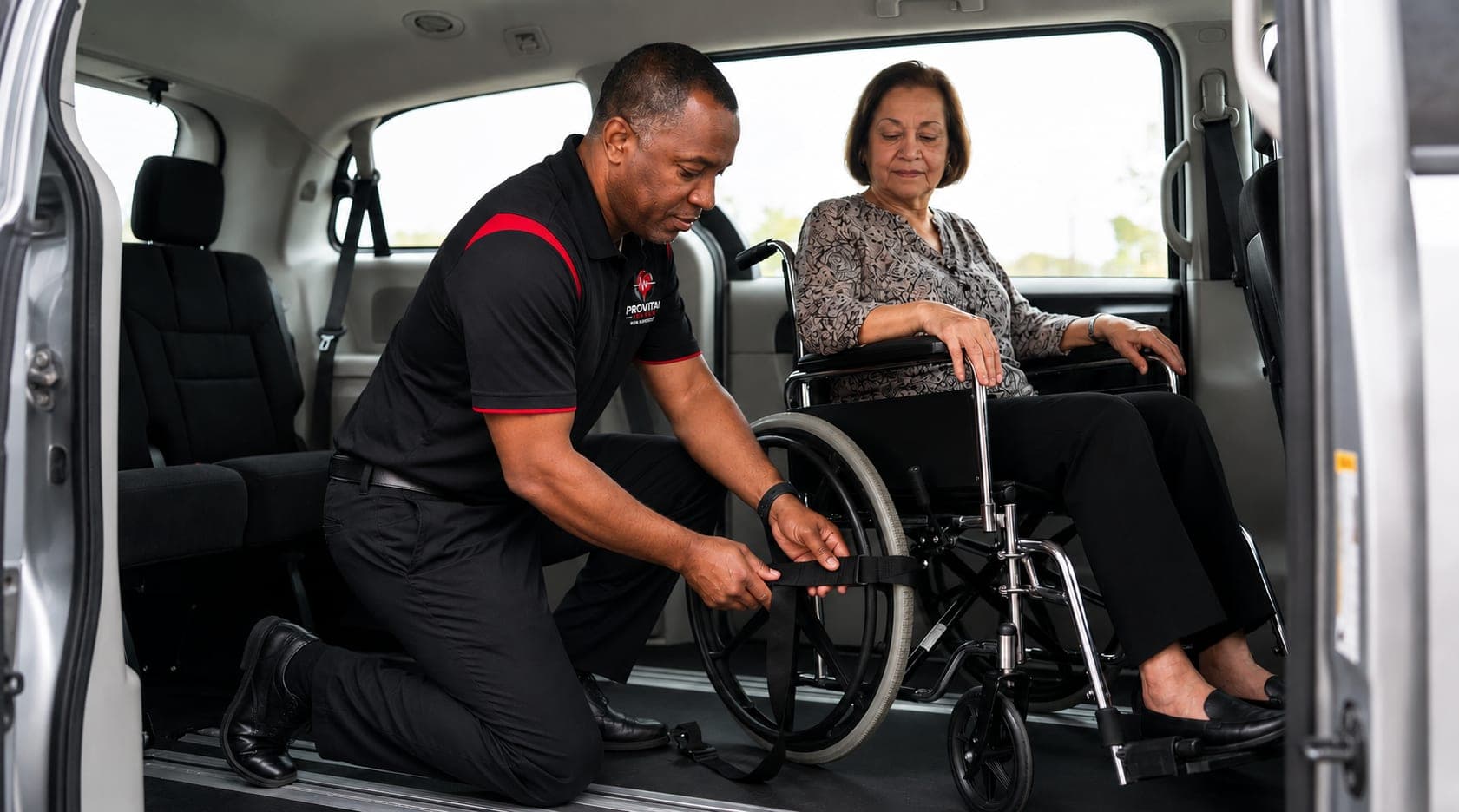
If mobility is a factor, settle it now rather than at the curb. Post-infusion weakness can turn a person who normally walks short distances into someone who genuinely cannot. Arranging wheelchair transportation in advance, with a vehicle that has a proper lift or ramp and a driver trained to secure the chair, removes a problem you do not want to discover while nauseated in a parking deck. This is especially worth confirming for the first cycle, before anyone knows how the body will respond.
Charlotte residents who qualify on income or disability grounds may also be eligible for the county's coordinated transportation program. The Mecklenburg Transportation System connects eligible residents to medical appointments, though it requires advance scheduling and is not built for the unpredictable end times that define an infusion day, so treat it as one option to weigh, not a guaranteed fit.

The night before: a short checklist that earns its place
- Confirm the ride and re-confirm that the return is flexible.
- Pack a small kit: water, a light snack the patient can tolerate, any anti-nausea medication, a phone charger, and a light layer, since infusion suites and vehicles both run cold.
- Write the infusion center's pickup entrance and phone number somewhere the driver and the patient can both see it.
- Plan for a companion if possible. Even a steady arm to the vehicle matters more than people expect.
During treatment: the hours the driver should respect, not fill
While the infusion runs, the transportation question becomes about staging, not movement. A good plan does not have a driver idling at the curb for three unpredictable hours, nor does it leave the patient stranded when discharge comes faster than expected.
The workable middle is a confirmed-call return. The patient or companion texts the provider when the nurse signals that treatment is wrapping, typically the last bag is hung or the port is being flushed, which gives a Charlotte-based driver a realistic window to arrive without leaving anyone waiting in a lobby. This is exactly the kind of same-day coordination a dedicated NEMT provider is built to handle and a rideshare app is not, because the app cannot hold a vehicle or wait for an uncertain discharge.
The goal is not a ride that arrives on time. It is a ride that arrives when the body is actually ready to leave.
Use this stretch to think one step ahead about immune precautions, because they change after the needle comes out. Many chemotherapy regimens suppress the immune system, and the days following infusion are when that matters most. A shared-ride vehicle full of strangers is a different risk on day three than it was on the way in. If the oncology team has flagged neutropenia or asked the patient to mask and limit exposure, the return trip and any follow-up rides should be private, not pooled.
After the appointment: the part no schedule prepares you for
This is the section that separates a real plan from a hopeful one. The hours immediately after infusion are when fatigue, nausea, and lightheadedness peak, and they are also when a poorly arranged ride does the most damage.
Build the return trip around three realities:
- Fatigue is not tiredness. Post-infusion exhaustion can make stairs, long walkways, and standing in a pickup line genuinely unsafe. Curb-to-curb is the minimum; door-through-door assistance, where the driver helps from the building to the seat and into the home, is what many patients actually need on heavy-treatment days.
- Nausea changes the vehicle. A long, stop-and-go route up I-77 or across uptown at rush hour is harder on a queasy stomach than a slightly longer but smoother path. A driver who knows to keep the cabin cool, avoid strong air fresheners, and carry a bag and water is worth more than the fastest GPS line.
- End times are unknowable, and that is fine. If the return is built on a confirmed call rather than a guessed time, a late discharge is an inconvenience instead of a crisis. This is the entire reason the plan exists.
NEMT is non-emergency by definition. If a patient experiences chest pain, difficulty breathing, a severe allergic reaction, uncontrolled vomiting, fainting, or any sudden serious symptom during or after treatment, call 911. A scheduled ride is never the right tool for a medical emergency.
When you are coordinating for someone else
Adult children and spouses often carry the chemo schedule on top of everything else, and infusion cycles repeat for months. The same discipline that keeps one appointment from unraveling, flexible returns, a packed kit, a known pickup entrance, scales into a routine. If you are managing recurring medical trips for a parent alongside their other care, our guide on building A Caregiver's Calendar for Aging-Parent Appointments offers a framework for keeping the whole schedule from becoming its own second job.
A quick reference for each phase
| Phase | What to lock down | The trap to avoid |
|---|---|---|
| Week before | Pickup entrance, regimen length, flexible return, wheelchair needs | Booking a fixed return time |
| During treatment | Confirmed-call signal to the driver; private vs. pooled ride | Idling a driver or stranding the patient |
| After | Door-through-door help, smooth route, cool cabin | Treating fatigue like ordinary tiredness |
Riding through the months ahead
Chemotherapy is not one appointment; it is a season. The ride plan that works is the one you can repeat without renegotiating it every cycle, the one that absorbs a late discharge, a hard day, a wheelchair you suddenly need. Get the structure right once, before, during, after, with flexibility built into the return, and transportation stops being one more thing to worry about. On a chemo day, that is no small thing.
Plan-it-once essentials
- Confirm the regimen length, the patient pickup entrance, and a day-of contact number before treatment day.
- Book the return as a confirmed-call window, not a fixed clock time, infusions run long.
- Arrange wheelchair-accessible, private transport in advance if mobility or immune precautions are in play.
- Plan the after for what it is: peak fatigue and nausea, where door-through-door help and a smooth route matter most.
- NEMT covers scheduled rides only; call 911 for any medical emergency.