
An estimated 5.8 million Americans delay or forgo medical care each year because they lack a way to get there. For a dialysis patient, that delay is not an inconvenience. It is a clinical event.
Dialysis is one of the few outpatient treatments where the appointment is the medicine. A person on in-center hemodialysis typically receives three sessions per week, each removing the fluid, potassium, and waste products that healthy kidneys would clear continuously. Skip one, and that physiology does not pause politely until the next visit. It compounds. The most striking part of the research is not that missed sessions are harmful, which is intuitive, but how often the reason has nothing to do with the patient's willingness to show up.
The Statistic That Should Change How We Think About Rides
When researchers examine why patients miss outpatient appointments, transportation surfaces again and again as a leading, and largely preventable, cause. Studies of care access have attributed a substantial share of missed visits to the simple absence of a reliable ride, and have estimated that millions of Americans annually defer needed care for that reason alone. The Agency for Healthcare Research and Quality and hospital-system analyses have repeatedly identified transportation as a core social determinant of health that drives no-shows and downstream costs.
Read those two numbers together and a pattern emerges. The problem is not that dialysis patients underestimate their treatment. It is that a structural gap, getting safely from home to the chair and back, is quietly converting committed patients into missed-appointment statistics.
What Actually Happens When You Miss One Session
Between sessions, fluid and electrolytes build in the bloodstream. A single missed treatment can push a patient toward several measurable dangers:
- Fluid overload. Excess fluid strains the heart and lungs, causing shortness of breath, swelling, and elevated blood pressure.
- Hyperkalemia. Potassium that dialysis would have removed can rise to levels that disturb heart rhythm. This is the complication most associated with sudden cardiac events in this population.
- Uremic buildup. Waste products accumulate, producing nausea, confusion, and fatigue.
Nephrology research has consistently found that patients who skip sessions or shorten treatments face higher rates of hospitalization and death than those who attend as scheduled. A missed Friday session, for example, lengthens the gap before the next treatment to a full weekend-plus, the exact interval clinicians already watch most closely for adverse events.

Why the Ride Fails Where the Patient Does Not
Transportation barriers are rarely about a single broken-down car. They cluster:
| Barrier | Why It Hits Dialysis Patients Hard |
|---|---|
| No personal vehicle | Post-treatment fatigue and fluid shifts make self-driving unsafe even when a car exists. |
| Unreliable informal rides | Depending on a relative for three round trips a week breaks down the first time work or weather interferes. |
| Limited fixed-route transit | Bus schedules rarely align with early-morning shift times, and transfers are punishing for frail patients. |
| Mobility needs | Patients who use wheelchairs require accessible vehicles that standard rideshare cannot provide. |
This is why we argue that getting to care is itself a clinical concern, a point we expand on in Why Transportation Is a Health Issue, Not Just a Ride. A treatment plan that assumes the patient will simply appear ignores the most common reason they do not.
Closing the Gap in the Charlotte Metro
The practical implication of the data is direct: if transportation causes roughly half of missed appointments, then a dependable ride is among the most effective interventions available, and it requires no new medication or procedure. It simply requires that the trip be treated with the same seriousness as the treatment itself.
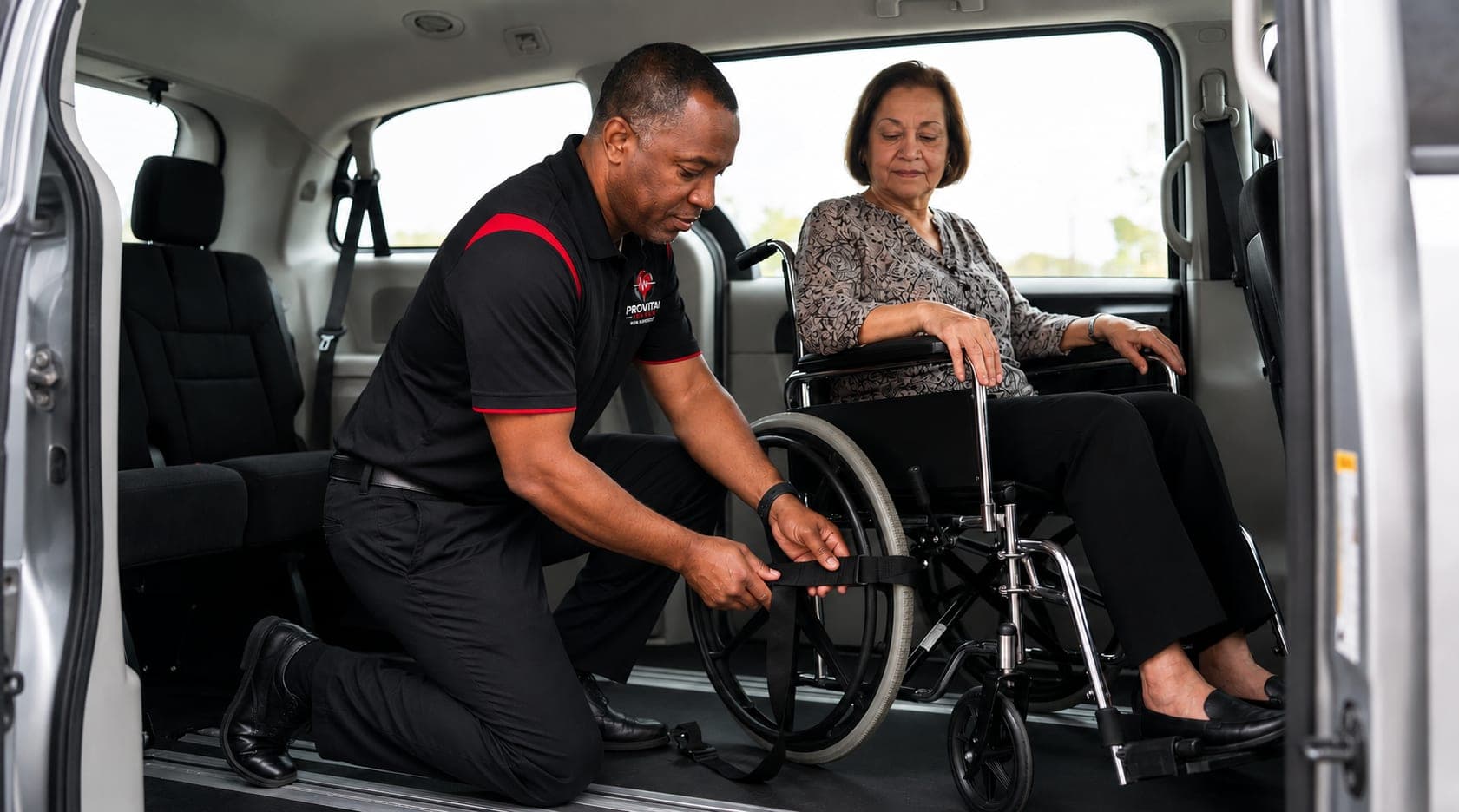
That is the standard we hold for dialysis transportation across the region. Patients on a three-times-weekly schedule benefit most from recurring, pre-arranged trips rather than booking each visit individually, a system we detail in The Standing-Order Guide for Dialysis Rides. Wheelchair-accessible vehicles, trained drivers, and consistent pickup windows turn the ride from a weekly gamble into a fixed part of the care plan for residents across Charlotte NC and surrounding communities.
What the Numbers Tell Us
- Roughly half of missed medical appointments are tied to transportation, not patient choice.
- An estimated 5.8 million Americans forgo care yearly for lack of a ride.
- A single missed dialysis session raises risk of fluid overload, dangerous potassium levels, hospitalization, and death.
- Reliable, recurring NEMT directly removes the most common preventable cause of missed treatment.
This article is informational and not medical advice. Discuss any change to your dialysis schedule with your nephrology team. For emergencies, call 911.