
Losing the ability to drive does not have to mean losing independence. Across Mecklenburg County, several programs now exist specifically to keep older adults connected to medical appointments, grocery stores, pharmacies, and the social ties that protect health over time. The challenge is rarely a total absence of options; it is knowing which program fits your situation, what it actually costs, and how long you may wait for a ride.
This roundup walks through the most useful senior transportation resources available in the Charlotte NC area, with candid notes on eligibility, fares, and wait times so you can plan rather than guess. A quick reminder before we begin: every option below is non-emergency. If someone is having a medical crisis, call 911 first.

1. Mecklenburg Transportation System (MTS)
The Mecklenburg Transportation System is the county's coordinated, demand-response service, and it has recently expanded to address a long-standing gap in rides for older residents. As of the program's expansion announcement, MTS is accepting new senior clients, which is meaningful news for families who may have been told in past years that rosters were full.
MTS is designed for residents who cannot reasonably use fixed-route transit on their own, and it is particularly relevant for trips to medical appointments, adult day programs, and essential errands. Because it is a coordinated county service rather than an on-demand app, rides are scheduled in advance, often a day or more ahead. Demand-response models inherently involve grouped routing, so build in flexibility: a pickup window is not the same as a precise departure minute, and the return leg may require patience.
Where to start: Review eligibility and intake details directly through the county at the Mecklenburg Transportation System program page, and confirm current new-client enrollment before assuming availability.
2. Shepherd's Center of Charlotte
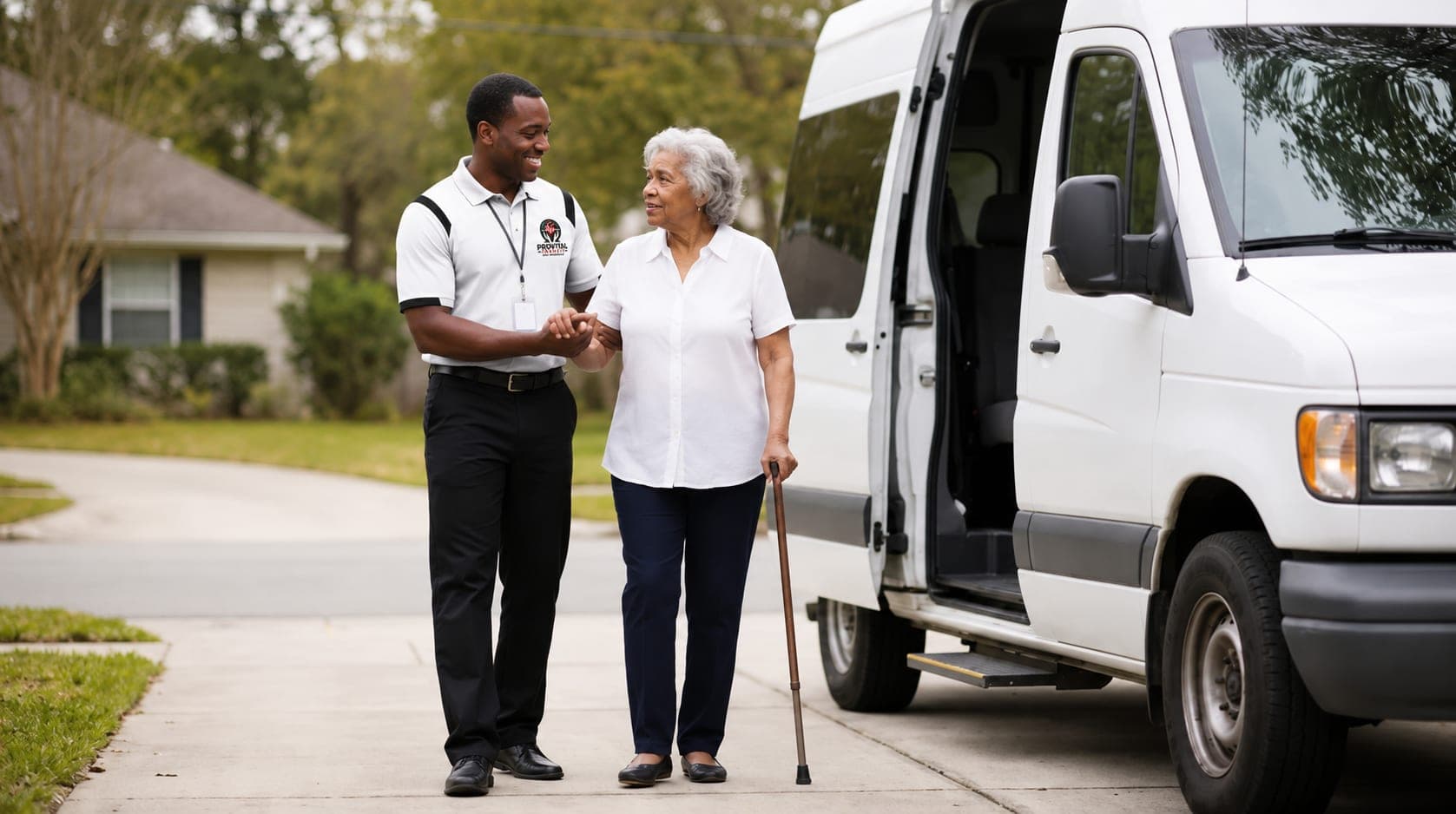
For many older adults, the most pressing need is a dependable ride to a doctor's office, and that is precisely the niche the Shepherd's Center of Charlotte fills. This nonprofit relies on trained volunteer drivers to provide rides for elderly residents who can no longer drive themselves, with a strong emphasis on medical appointments.
The volunteer-driven model has real strengths and real limits. On the positive side, it is typically low-cost or donation-based, and the door-through-door attention from a volunteer can be more personal than a fleet service. The trade-off is capacity: volunteer availability varies by day and by neighborhood, so requests must usually be made well in advance, and same-day or evening rides are generally not realistic. Membership or registration with the center is commonly required before your first trip.
A volunteer ride to a check-up is one of the simplest, most affordable ways to keep a senior tethered to consistent medical care.
3. findhelp (formerly Aunt Bertha)
When you are not sure which program a person qualifies for, findhelp is the most efficient way to scan the full landscape at once. It is a free social-care search platform that lets you enter a Charlotte-area ZIP code and pull up transportation assistance, including reduced-fare programs, volunteer driver networks, and disability-related services.
Treat findhelp as a directory rather than a dispatcher. It will not book a ride for you, and listings can occasionally lag behind a program's current intake status, so always confirm details by calling the provider directly. Its value is breadth: in a single search you can surface options you would otherwise never hear about, then narrow to the two or three worth a phone call.
4. CATS fixed-route and paratransit (STS)
The Charlotte Area Transit System serves seniors in two distinct ways. First, reduced fares on buses and the LYNX light rail make fixed-route travel inexpensive for those who can still navigate a stop and a schedule. Second, for riders whose disabilities prevent independent use of fixed routes, CATS operates a complementary paratransit service with an application and certification process.
Paratransit is a strong fit for ADA-eligible riders, but eligibility is determined case by case, certification takes time, and rides must be reserved in advance within defined service areas and hours. If a senior lives near a reliable bus line and is comfortable with public transit, the reduced-fare option is often the most economical choice of all.
5. Specialized NEMT for medical trips
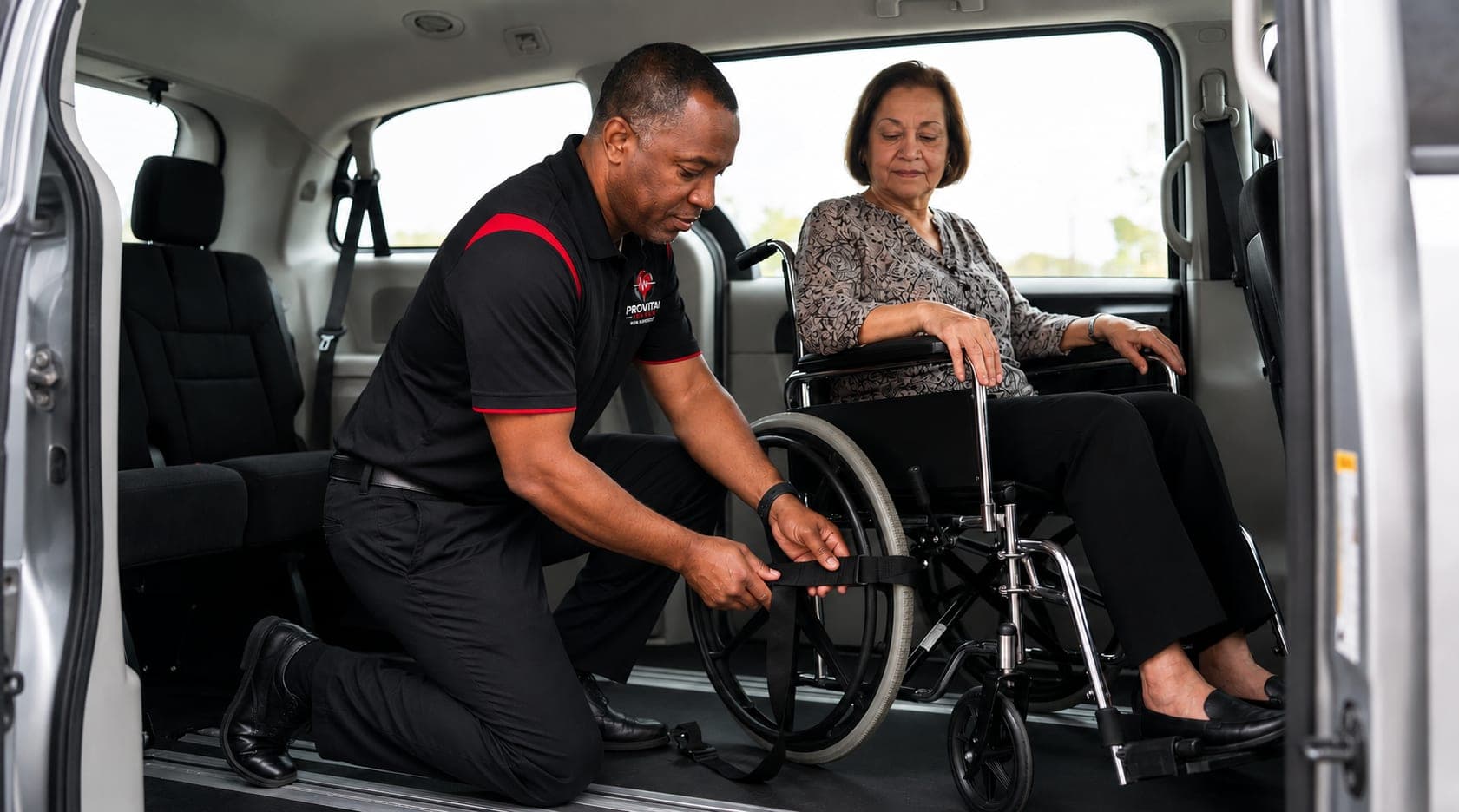
Some trips demand more than a standard sedan: wheelchair lifts or a trained attendant for a rider who needs steady assistance. This is where dedicated non-emergency medical transportation earns its place alongside the public and volunteer options above. Scheduled NEMT offers door-to-door service, vehicles equipped for mobility devices, and the reliability of a confirmed pickup rather than a routed window.
Cost varies by trip type and equipment, and Medicaid-enrolled riders may have covered transportation benefits worth verifying. If a benefit lapses or a covered ride falls through, our guide to When Your Insurance Ride Runs Out: What to Do Next walks through the practical alternatives.
Plan around dialysis, infusion, and recurring care: standing appointments are exactly the scenario where a scheduled NEMT provider outperforms ad-hoc rides, because the same route and timing repeat reliably each week.
How to choose the right option
The best choice depends less on which program is "best" overall and more on the specific trip in front of you. A few honest guidelines:
- Match the program to the need. Routine medical visits suit Shepherd's Center or NEMT; broad errands and fixed schedules favor MTS or CATS; uncertainty calls for a findhelp search first.
- Weigh cost against control. Volunteer and reduced-fare options are cheapest but least flexible. Dedicated NEMT costs more and delivers confirmed timing and mobility equipment.
- Respect lead time. Nearly every option here rewards advance booking. Same-day expectations are where plans most often break down.
- Verify before you rely. Intake status, fares, and service areas change. Confirm by phone before the day of the appointment.
For many Charlotte families, the durable solution is a combination: a low-cost public or volunteer ride for predictable trips, paired with a dependable NEMT provider for the appointments where equipment, timing, or assistance genuinely matter. If you are weighing that mix for someone you care for, we are glad to help you sort out the details.