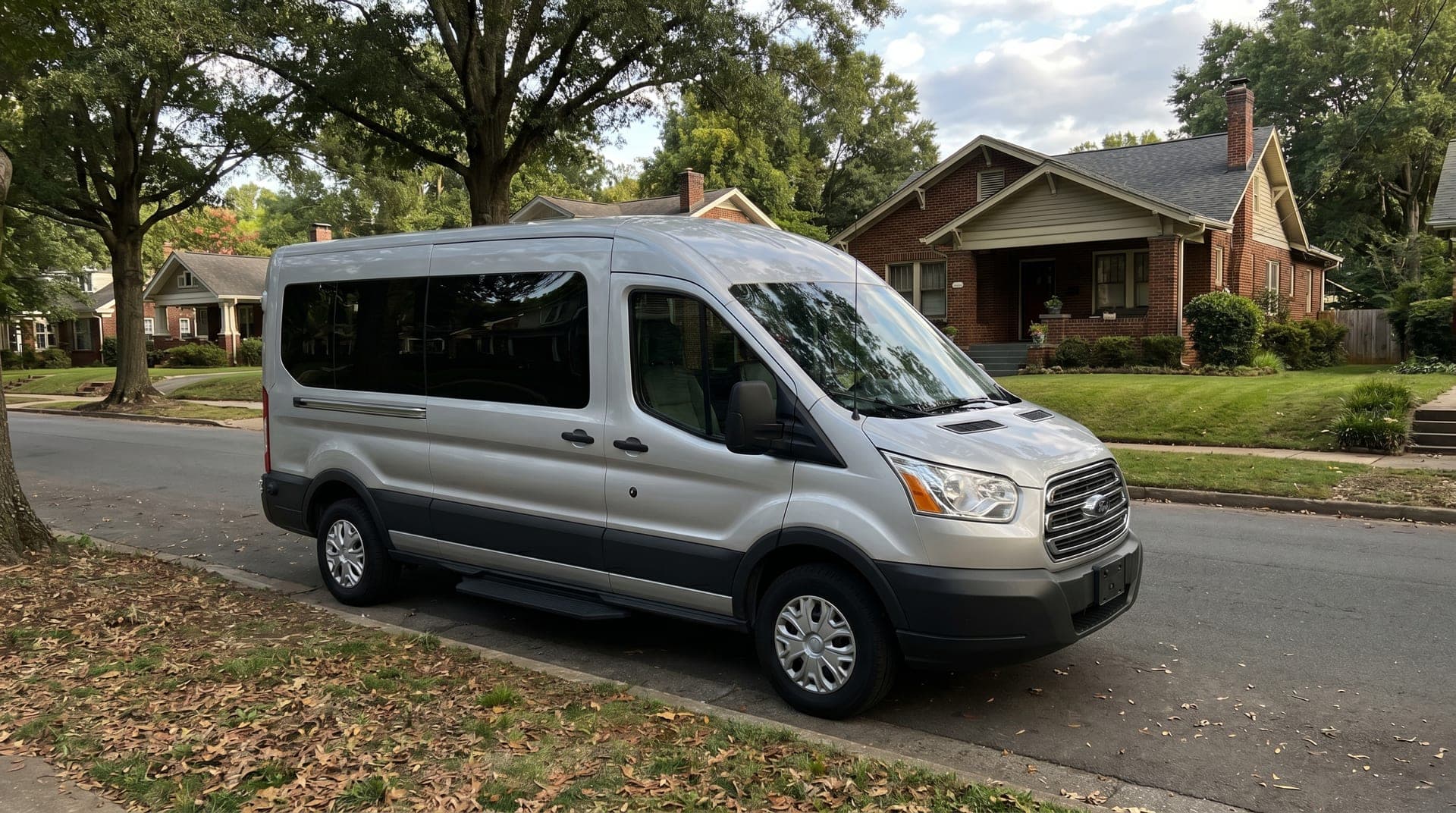

Moving a patient hundreds of miles is a different undertaking than a ride across town. A trip from Charlotte to a specialty hospital in Atlanta, a rehabilitation facility in Virginia, or a relative's home in Florida introduces variables that short local runs never raise: driver hours, overnight rest, fuel, equipment level, and how the patient is physically handed off at each end. Families and case managers who understand these variables before booking avoid the most common surprise, which is a quote that looks one way on the phone and another way on the invoice. This guide walks through the structure of long distance medical transport cost, the service tiers that drive it, and the specific items worth confirming before a wheel turns.
What "long-distance" actually means in NEMT
Non-emergency medical transportation (NEMT) covers scheduled, medically supervised travel for people who cannot safely use a personal vehicle, rideshare, or standard ambulance for a planned move. Long-distance work generally begins where a single trip leaves the metro and crosses into multi-hour or multi-state territory. None of this is for emergencies: if a patient is unstable or facing a sudden medical crisis, the correct response is 911, not a scheduled transport.
Curb-to-curb versus bed-to-bed
The single largest driver of both price and patient experience is the service tier you select. Curb-to-curb service moves an ambulatory or wheelchair-using patient from one doorway to another; the patient reaches the curb under their own power or with light assistance. Bed-to-bed (sometimes called door-through-door) means the crew lifts and transfers the patient from a bed at origin, and settles them into a bed at the destination, including stairs, narrow hallways, and elevators along the way.
For a cross-state move, bed-to-bed is frequently the realistic option, because a patient who cannot sit up for the ride still cannot in Richmond. Transport for a patient who must travel lying on a stretcher is, under North Carolina rules, ambulance transportation — a licensed ambulance provider, not ordinary NEMT. ProVital arranges long-distance rides for ambulatory and wheelchair passengers.
Who is on board
Staffing scales with acuity. A wheelchair transport may carry a single trained driver. Patients who need oxygen titration, suctioning, or monitoring may require a higher clinical level, which raises the rate. Confirm the crew's certification matches the patient's documented needs before booking.

How long-distance transport is priced
Most providers build a long-distance quote from a small number of components rather than one flat figure. Understanding the parts lets you compare two quotes that look different on the surface.
Per-mile bands and base rates
The backbone of how much long distance medical transport costs is usually a base dispatch fee plus a per-mile charge, and that per-mile rate varies by service tier. Wheelchair mileage sits at the lower end; higher-acuity mileage runs higher because of the added crew and equipment. Industry guidance from established long-distance transport providers describes pricing built around mileage bands layered on top of a base rate, which mirrors how most reputable operators quote.
Two practical notes. First, ask whether the per-mile rate covers loaded miles only or also the deadhead miles the vehicle drives empty to reach you and to return. Second, ask where the mileage clock starts and stops, because a quote measured garage-to-garage differs from one measured door-to-door.
Surcharges that change the total
Several add-ons commonly appear on long-distance invoices. Knowing them in advance prevents sticker shock:
- Oxygen and clinical supplies billed per trip or per unit.
- Second attendant for bed-to-bed lifts, stairs, or bariatric needs.
- Wait time beyond a grace window at either end.
- After-hours, weekend, or holiday dispatch premiums.
- Tolls, fuel surcharges, and overnight lodging for the crew on multi-day routes.
- Bariatric equipment when specialized equipment or a lift is required.
Insurance rarely covers long-distance NEMT in full. Standard Medicare does not pay for routine non-emergency transport, and Medicaid coverage for cross-state, non-emergency moves is limited and requires prior authorization. Assume long-distance transport is largely an out-of-pocket expense unless you have confirmed coverage in writing, and ask the provider for an itemized estimate you can submit for any partial reimbursement.
The logistics of a multi-hour move
Distance introduces operational realities that a 20-minute local ride never touches. These affect both comfort and cost.
Driver hours and rest stops
Crews are bound by safe-driving limits, and a genuinely long route may require a planned overnight or a relay between teams. A trip from Charlotte to South Florida, for instance, is not a single-shift drive. Confirm whether your quote assumes one continuous run or includes crew lodging, and ask how rest stops are handled for the patient, including repositioning, hydration, toileting, and medication timing.
Coordinating both ends of the trip
A clean handoff depends on the receiving facility being ready. For bed-to-bed medical transport between states, the destination needs to expect the patient, have a bed assigned, and know the estimated arrival window. Discharge timing on the origin side is just as important; if you have ever faced a release with no plan in place, our piece on No Ride Home: Solving the Discharge-Day Scramble covers how to avoid that gap. Build in buffer: discharges slip, and a transport that idles waiting on paperwork can accrue wait-time charges.
A long-distance quote is only as reliable as the questions you ask before booking; the cheapest number on the phone is rarely the cheapest number on the invoice.
Estimating your own range
While exact figures depend on tier, mileage, and surcharges, you can build a working estimate with a simple framework. The table below shows how the components stack for a hypothetical one-way trip; treat the structure as the takeaway, not the specific dollar inputs, which you should confirm with a provider.
| Cost component | What drives it | Confirm before booking |
|---|---|---|
| Base dispatch fee | Service tier (ambulatory vs. wheelchair) | Whether it's flat or distance-scaled |
| Per-mile charge | Tier and total route miles | Loaded vs. deadhead miles included |
| Crew level | Patient acuity and lift needs | Number and certification of attendants |
| Overnight / relay | Total drive time and rest rules | Lodging billed to you or absorbed |
| Surcharges | Oxygen, tolls, wait, after-hours | Itemized list in writing |
For a broader view of the alternatives, from ground transport to air options, the overview from Emergency Assistance Plus lays out where ground NEMT fits among the choices for moving a patient long distances.
Before you book, confirm
- Service tier: curb-to-curb or bed-to-bed, and that it matches the patient's real mobility.
- Mileage basis: whether the rate covers loaded miles only and where the clock starts.
- Crew: number of attendants and certification level for the patient's needs.
- Rest plan: how overnights, relays, and rest stops are handled and billed.
- Itemized estimate: every surcharge in writing, plus documentation for reimbursement.
Moving a patient from the Charlotte metro
When the goal is simply moving a patient to another city, non-emergency, the planning sequence matters more than any single rate. Start by defining the patient's mobility honestly, then request itemized quotes from providers that document their crew and equipment, and finally lock the arrival window with the receiving facility. Because the Charlotte region sits within a day's drive of major medical centers across the Carolinas, Georgia, and Virginia, ground transport is often the most practical and economical choice for these moves.
ProVital Transit coordinates long distance medical transport for families and case managers across the Charlotte, NC metro, with transparent, itemized estimates so the figure you plan around is the figure you pay. The right preparation turns a daunting cross-state move into a scheduled, predictable, and dignified journey.
This article is general guidance, not medical or insurance advice. For an unstable patient or any medical emergency, call 911. Confirm coverage and pricing directly with your provider before booking.