
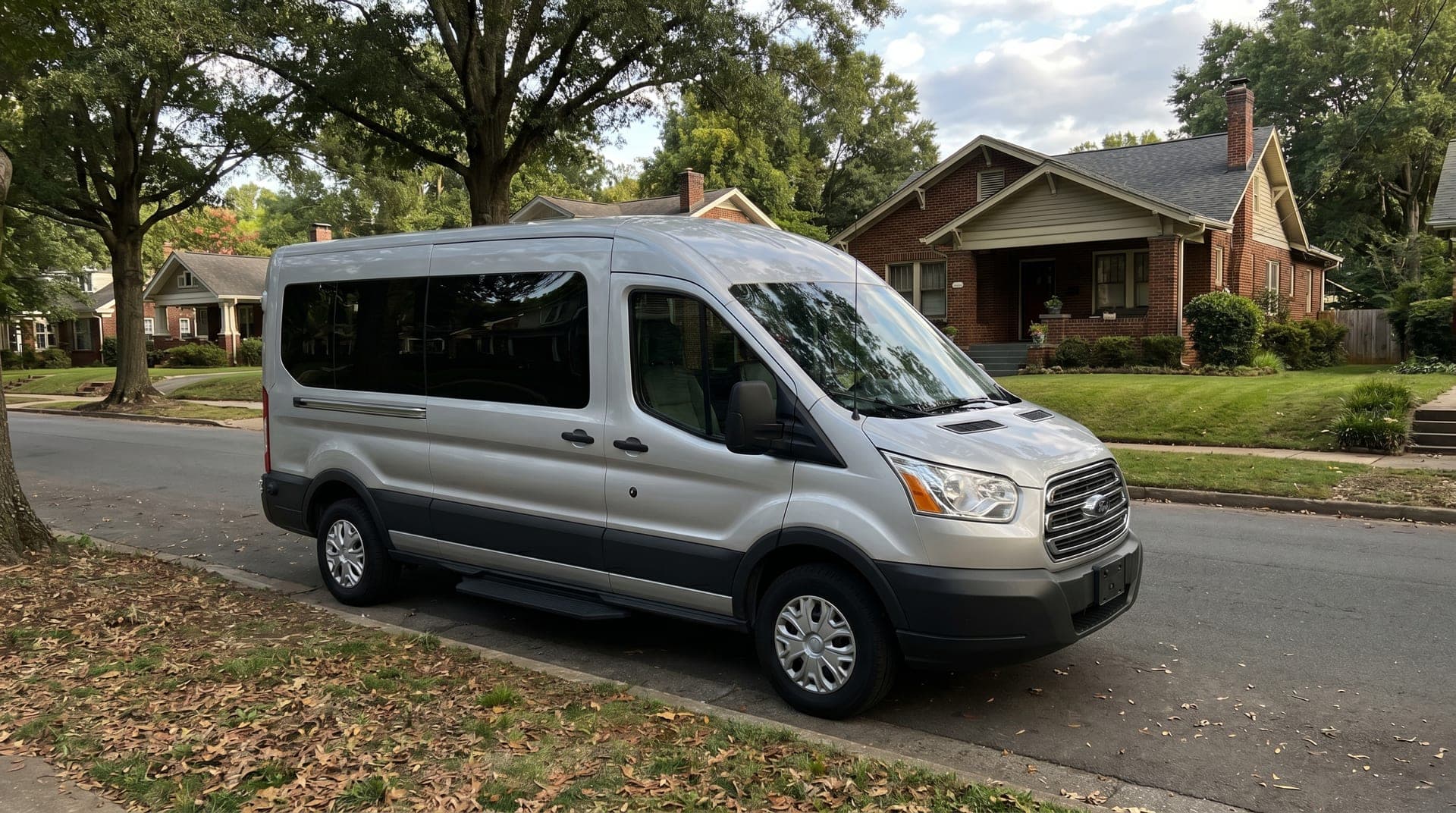
Picture a Tuesday morning appointment that never happens. The exam room sits empty, the chart gets stamped "no-show," and somewhere across the Charlotte metro a patient is still standing at a bus stop or waiting on a ride that fell through. From the clinic's side, it looks like a scheduling problem. It is not. It is a health problem wearing the costume of a logistics problem, and treating it as anything less is how we keep losing people to causes we already know how to prevent.
Here is the thesis, stated plainly: transportation is a social determinant of health, and reliable non-emergency medical transportation is preventive care. Not a convenience. Not a perk. A clinical input on the same shelf as medication adherence and blood pressure control. When the ride is unreliable, the care plan is unreliable, no matter how good the medicine is.
Yes, transportation is a social determinant of health
The phrase "social determinants of health" describes the non-medical conditions that shape whether people actually get and stay well: housing, income, food access, and mobility. Transportation sits squarely inside that framework. The American Hospital Association has documented how unreliable transportation directly drives missed appointments, delayed care, and worse chronic-disease management, and has urged health systems to treat it as a core access issue rather than a patient's private burden (American Hospital Association, Transportation and the Role of Hospitals).
The scale is not abstract. An estimated 5.8 million Americans delay or skip medical care every year because they lack transportation. And among adults without access to a vehicle, roughly 21% report skipping needed care — more than double the rate of those who can simply get in a car and drive. Those are not edge cases. That is a structural gap, and in a spread-out region like ours, geography makes it sharper.
What counts as NEMT. Non-emergency medical transportation covers scheduled, medically necessary trips — dialysis, chemotherapy, post-surgical follow-ups, specialist visits — for people who cannot safely or reliably drive themselves. It is not an ambulance. For a medical emergency, always call 911.
How a missed ride becomes a missed outcome
The damage is not evenly distributed across the calendar. For most conditions, one missed visit is a setback. For others, it is a countdown. Consider three patterns we see again and again:
- Standing, time-sensitive treatment. A dialysis patient is typically scheduled three times a week, every week, with no slack in the system. Miss one session and the body begins accumulating fluid and toxins it cannot clear on its own — which is exactly why Missing One Dialysis Session Is More Dangerous Than You Think is not hyperbole but physiology.
- Disease management that compounds. A skipped diabetes or heart-failure check doesn't announce itself. It shows up weeks later as an emergency-department visit that costs far more — in dollars and in damage — than the ride would have.
- The slow erosion of trust. After two or three unreliable rides, patients stop scheduling altogether. The care plan quietly collapses, and the chart never records why.

This is the part that gets lost when transportation is filed under "operations." The clinical literature is increasingly direct that mobility barriers translate into measurable harm — worse chronic-disease outcomes, higher acute utilization, and avoidable cost — and that the fix belongs inside the care model, not outside it (Health Affairs).
A care plan a patient cannot physically reach is not a care plan. It is a wish list.
The Charlotte access gap is specific, not theoretical
It is tempting to read national figures as someone else's problem. They are not. The Charlotte metro is geographically wide and unevenly served by transit. Dialysis centers, oncology infusion suites, and specialist offices cluster in particular corridors, while many of the patients who depend on them live where fixed-route transit is thin, infrequent, or simply absent. A three-mile trip on a map can be a two-transfer, ninety-minute ordeal for someone who is already fatigued from treatment.
Public programs were supposed to absorb some of this. North Carolina's Medicaid system has long included a non-emergency transportation benefit, and recent state initiatives aimed to fund rides as a health intervention — but coverage has been uneven and, in places, has contracted. We wrote about that shift in What Happened to NC's Healthy Opportunities Rides, because the gap between what's promised and what's reliably available is exactly where patients fall through.
Across Charlotte NC and the surrounding counties, that gap shows up most acutely for patients on recurring, non-negotiable schedules — which is why dialysis transportation is where the stakes are highest and where dependability matters most.
What treating transportation as care actually requires
If transportation is a determinant of health, then the standard for an NEMT provider should look less like a taxi dispatcher's and more like a clinic's. The difference is measurable.
| When transportation is treated as… | A ride | Preventive care |
|---|---|---|
| Reliability standard | "Usually on time" | Treated like a scheduled treatment — missed pickups are tracked and corrected |
| Driver capability | Get from A to B | Trained for mobility assistance, wheelchair securement, and frail passengers |
| Scheduling | One trip at a time | Standing recurring trips built around the care plan |
| Success metric | Fare collected | Appointment kept, outcome protected |
None of this is exotic. It is the difference between a service that happens to move sick people and a service designed around the fact that the people are sick. The second kind shows up early, accommodates a walker or a wheelchair without drama, and builds a recurring schedule so the patient never has to re-solve the same problem three times a week.
If you or someone you care for is missing appointments because rides keep falling through, treat that as a clinical issue worth raising with the care team — not a personal failing. The missed visit and the missing ride are the same problem.
The case, restated
We can keep counting no-shows as a billing inconvenience, or we can call them what they are: early warnings of preventable decline. The figures are not ambiguous — millions of Americans forgo care each year for lack of a ride, and the people without a vehicle skip care at roughly twice the rate of those who have one. In a region as spread out as the Charlotte metro, that math falls hardest on exactly the patients who can least afford a missed session.
Reliable NEMT does not cure disease. It does something quieter and just as essential: it makes the rest of medicine possible. When the ride is dependable, the dialysis happens, the cancer is treated on schedule, the chronic condition stays managed, and the emergency that never comes is the whole point. Transportation, in other words, is not the thing that gets you to care. For too many people, it is the care — the part that decides whether everything else even gets a chance to work.